Your home’s foundation supports everything above it, so even a small change can be worth paying attention to. Common signs your foundation needs repair include widening foundation cracks, sticking doors and windows, uneven floors, bowing basement walls, gaps around the home, and unexplained water entering the basement or crawl space.
Not every crack means your foundation is failing. Homes naturally settle, materials expand and contract, and seasonal changes can create minor cosmetic cracks. The concern increases when a problem is new, growing, appears in several areas, or occurs together with moisture or drainage problems.
For homeowners in Traverse City, MI and throughout Northern Michigan, water management deserves particular attention. Heavy rain, snowmelt, groundwater, and freeze-thaw conditions can affect the soil surrounding your foundation.
Signs Your Foundation Needs Repair
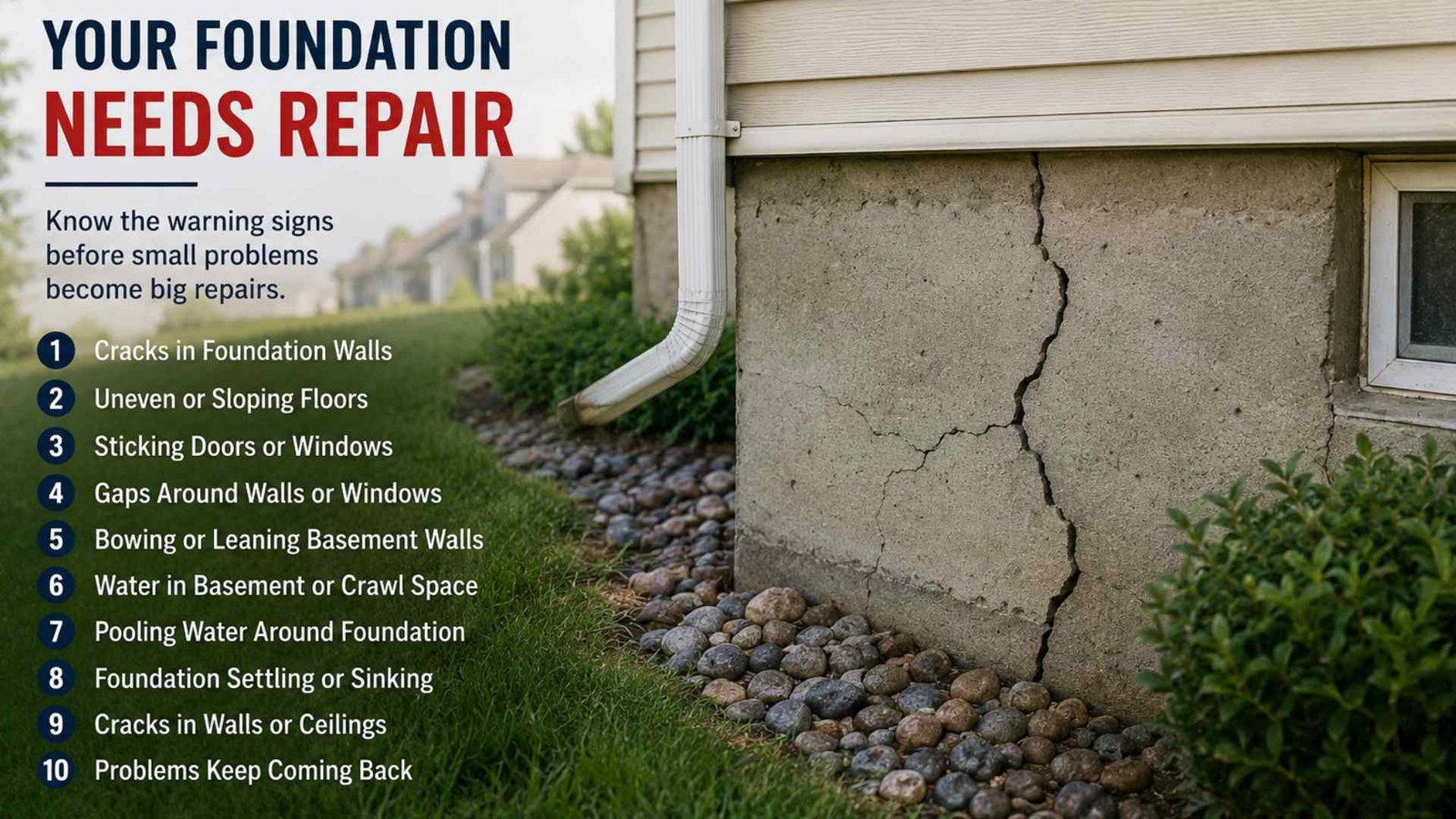
Here are 10 warning signs you should know.
1. Cracks in Foundation Walls
Cracks are one of the easiest foundation problems to spot.
Not every crack is serious. Small hairline cracks can happen as concrete dries or as a home settles.
You should pay more attention to:
- Horizontal cracks
- Stair-step cracks
- Wide cracks
- Cracks that keep growing
- Cracks that leak water
- Cracks near a bowing wall
If water is coming through the crack, you may also have a moisture problem.
In that case, a professional basement waterproofing solution may help stop water from entering your basement.
A simple tip is to take photos of the crack every few months. This makes it easier to see if it is getting bigger.
2. Cracks Around Doors and Windows
Foundation movement can also cause cracks inside your home.
You may see cracks:
- Above doors
- Around windows
- On drywall
- On ceilings
- Near wall corners
One small crack may not be a major issue.
But several new cracks can be a warning sign, especially if they keep growing.
You should also look for other signs, such as uneven floors or sticking doors.
3. Doors and Windows Start Sticking
Doors and windows should open and close without much trouble.
If they suddenly start sticking, the frame may have shifted.
You may notice:
- Doors rubbing against the frame
- Doors that will not latch
- Windows that are hard to open
- Gaps around frames
- Frames that look uneven
Humidity can also cause doors to stick.
But if several doors or windows have the same problem, foundation movement may be the cause.
4. Floors Feel Uneven or Sloped
Walk through your home and pay attention to your floors.
Do they feel uneven?
Does one side of the room seem lower?
Do you notice gaps near the baseboards?
Foundation movement can cause floors to slope or sag.
But there can also be other causes, such as damaged floor supports or moisture under the home.
If you have a crawl space and water collects below your house, crawl space drainage systems can help manage that water.
New or serious floor movement should be checked by a professional.
5. Basement Walls Are Bowing
Basement walls should look straight.
A wall that bends or leans inward can be a serious warning sign.
Wet soil can place pressure against your foundation walls. This often gets worse after heavy rain or snowmelt.
Watch for:
- Bowing walls
- Bulging walls
- Horizontal cracks
- Cracks near the middle of the wall
A bowing wall should be checked by a qualified foundation or structural expert.
Water around the outside of the home may also need attention.
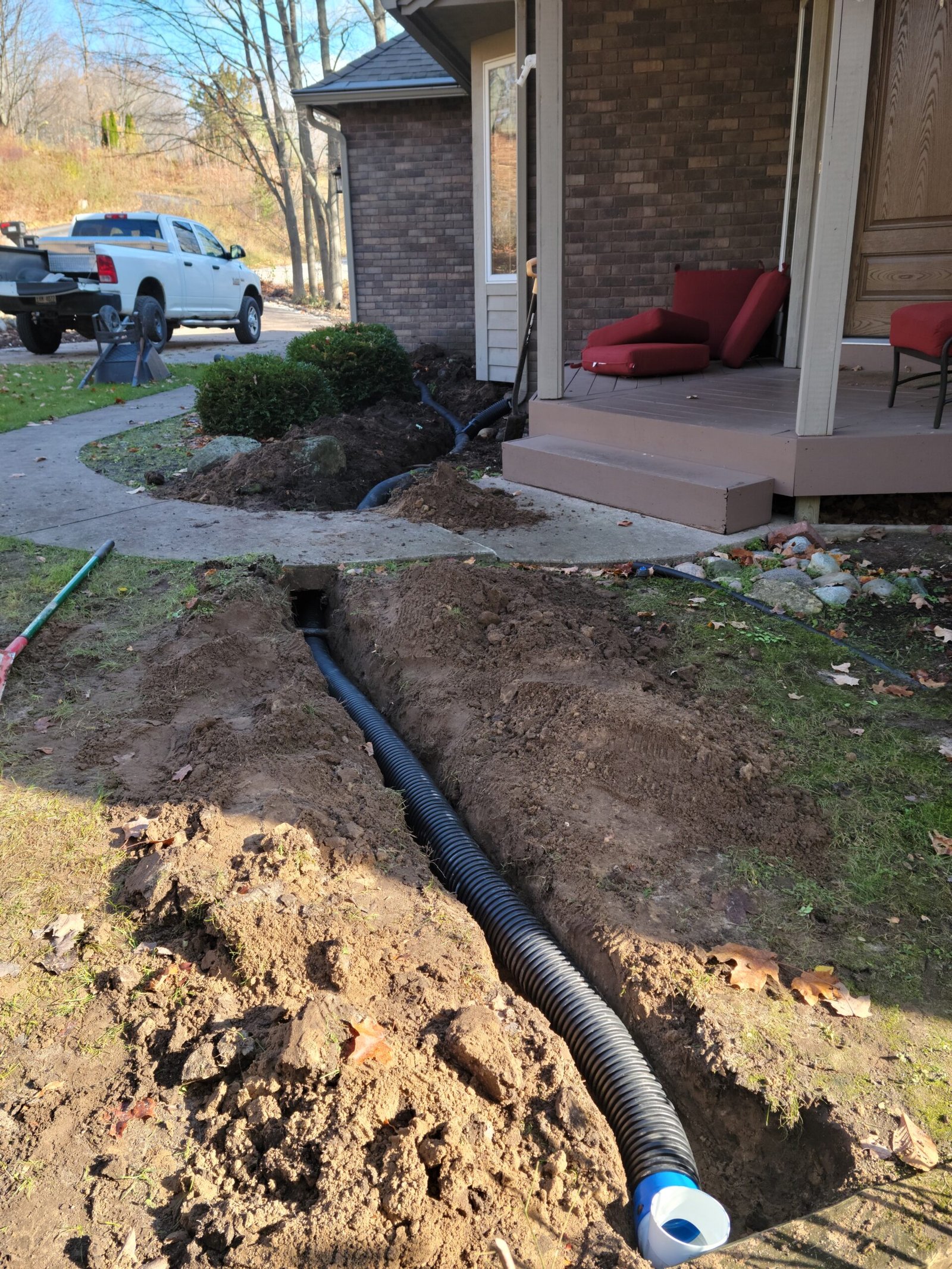
An exterior drainage system can help move water away from the foundation.
6. Gaps Appear Around Your Home
Foundation movement can create gaps between parts of your home.
Look for gaps between:
- Walls and ceilings
- Walls and floors
- Cabinets and walls
- Baseboards and floors
- Window frames and walls
- Door frames and walls
Small gaps can happen for many reasons.
The bigger concern is when the gaps grow or appear in several places.
If that happens, it is best to find the cause before doing cosmetic repairs.
7. Water Is Entering Your Basement
A wet basement does not always mean your foundation is damaged.
But it does mean water is getting inside your home.
You may notice:
- Damp walls
- Wet floors
- Water stains
- Musty smells
- Standing water
- Water after heavy rain
- Moisture during snowmelt
Water can enter through cracks, joints, or weak areas in the foundation.
If water enters near the edge of your basement floor, an interior drainage system may help collect and remove it.
H2O Drainage Systems helps homeowners find the source of basement water and choose the right drainage solution.
8. Water Pools Near the Foundation
Walk around your home after heavy rain.
Do you see water sitting next to the foundation?
That is a warning sign.
Water should move away from your house.
Pooling water may be caused by:
- Poor grading
- Short downspouts
- Clogged gutters
- Low areas in the yard
- Poor drainage
- Heavy roof runoff
Too much water near the foundation can make the surrounding soil very wet.
An exterior drainage system can help move this water away.
You should also check your downspouts.
Gutter extensions can carry roof water farther from the foundation.
9. Part of Your Home Looks Like It Is Sinking
One part of your home may start to settle lower than another part.
This can cause:
- Uneven floors
- Cracks in walls
- Gaps near doors
- Gaps near windows
- Steps pulling away from the house
- Porches separating from the home
Serious settlement should be checked by a foundation or structural professional.
Drainage should also be checked if water or erosion is affecting the soil around the home.
10. Cracks Keep Coming Back
Do you repair a crack only to see it return?
That can be a sign that the real cause has not been fixed.
The same can happen with basement leaks.
Sealing a crack may stop the problem for a short time. But if water pressure is still present, the leak may return.
The cause could be:
- Foundation movement
- Groundwater
- Poor drainage
- Wet soil
- Hydrostatic pressure
- Settlement
If groundwater is the problem, an interior drainage system and sump pump may help.
The goal is to fix the cause, not just hide the symptom.
Which Foundation Cracks Are Serious?
Some foundation cracks are harmless.
Others need attention.
You should be more concerned if the crack is:
- Getting wider
- Horizontal
- Stair-stepped
- Leaking water
- Near a bowing wall
- Appearing with uneven floors
- Coming back after repair
If you are not sure, take photos and watch the crack over time.
If it changes, call a professional.
Normal Settling vs. Foundation Problems
Homes can settle over time.
Small cracks may happen without causing major damage.
The main thing to watch is change.
A small crack that stays the same may not be serious.
But a crack that grows, along with sticking doors and sloping floors, may be a sign of foundation movement.
Look at the full picture instead of one small problem.
Why Northern Michigan Homes Face More Water Problems
Homes in Northern Michigan deal with changing weather throughout the year.
Winter and spring can be especially hard on foundations.
Freezing soil, melting snow, and heavy rain can add a lot of moisture around your home.
If that water cannot drain away, the soil around your foundation can stay wet.
That can lead to basement leaks and extra pressure against foundation walls.
Homeowners can learn more about our Traverse City waterproofing and drainage services.
How Poor Drainage Can Affect Your Foundation
Water should move away from your home.
When it collects near the foundation, the soil can become saturated.
That water may enter through:
- Cracks
- Wall joints
- Basement floors
- Utility openings
- Crawl spaces
Different water problems need different solutions.
Surface water may need an exterior drainage system.
Roof water may need gutter extensions.
Groundwater may need an interior drainage system and sump pump installation.
Water under your home may need crawl space drainage.
The right solution depends on where the water is coming from.
Foundation Repair vs. Basement Waterproofing
Foundation repair and waterproofing are not the same thing.
Foundation Repair
Foundation repair deals with structural problems.
These may include:
- Serious settlement
- Large cracks
- Bowing walls
- Foundation movement
- Structural damage
A structural engineer or foundation repair contractor may be needed.
Basement Waterproofing
Basement waterproofing focuses on water problems.
It can help with:
- Basement leaks
- Groundwater
- Wet walls
- Standing water
- Poor drainage
- Water near the foundation
Some homes may need both foundation repair and drainage work.
Finding the real cause is always the first step.
How to Protect Your Foundation From Water
A few simple steps can help protect your home.
Clean Your Gutters
Blocked gutters can overflow.
This sends water down next to your foundation.
Clean your gutters often, especially in the fall.
Move Downspout Water Away
Downspouts should not empty right next to your home.
If they do, gutter extensions can help move the water farther away.
Check for Standing Water
Look around your home after rain.
If water stays near the foundation, you may have a drainage problem.
Test Your Sump Pump
A sump pump should be ready before heavy rain or snowmelt.
If you need a new system, learn more about our sump pump installation service.
Fix Basement Leaks Early
Do not ignore small leaks.
A small water problem can become worse over time.
Read our guide to basement waterproofing methods to learn more.
When Should You Call a Professional?
Call a professional if you see:
- A bowing basement wall
- A crack that is getting wider
- Major floor movement
- Serious settlement
- Large wall gaps
- Several warning signs at once
Structural problems should be checked by a qualified foundation expert or structural engineer.
If your problem is related to water, drainage, basement leaks, sump pumps, or crawl space moisture, H2O Drainage Systems can help.
Protect Your Home Before the Problem Gets Worse
Foundation problems are easier to manage when you catch them early.
Pay attention to cracks, uneven floors, sticking doors, basement leaks, and standing water around your home.
If your main problem is water, good drainage can make a big difference.
H2O Drainage Systems provides basement waterproofing, interior drainage, exterior drainage, sump pump installation, gutter extensions, and crawl space drainage.
If you live in Traverse City or nearby and have water around your foundation, contact H2O Drainage Systems for a free on-site estimate.
Frequently Asked Questions
What are the first signs your foundation needs repair?
Early signs include cracks, uneven floors, sticking doors, gaps around windows, and basement moisture.
Are all foundation cracks serious?
No. Small cracks may be normal. Cracks that grow, leak, or run horizontally should be checked.
Can poor drainage damage a foundation?
Yes. Water near the foundation can make the soil very wet and increase pressure around the home.
Is a wet basement a foundation problem?
Not always. A wet basement may be caused by cracks, groundwater, poor drainage, or other water problems.
Can a sump pump fix foundation damage?
No. A sump pump does not repair structural damage. It helps remove water from the basement drainage system.
When should I call a foundation expert?
Call one if you see large cracks, bowing walls, major settlement, or serious floor movement.
How can I keep water away from my foundation?
Keep gutters clean, extend downspouts, fix standing water, and use the right drainage system when needed.