Interior vs. exterior basement waterproofing comes down to where your water problem starts and how it needs to be controlled. Exterior systems are designed to keep water away from the foundation, while interior systems collect and redirect groundwater or seepage before it reaches your basement living space. For many homes, the right answer is based on drainage conditions rather than choosing one method by default.
If you have found water on your basement floor, damp walls, efflorescence, or a musty smell, deciding how to waterproof the basement can quickly become confusing.
Do you need to excavate around the foundation? Can the problem be handled from inside? Will a sump pump solve it? Or does water around the home need to be redirected first?
H2O Drainage Systems believe the first step should be identifying how water is reaching the foundation. Once the source is understood, it becomes much easier to determine whether interior waterproofing, exterior drainage, or a combination of water-control measures makes sense.
Interior vs. Exterior Basement Waterproofing at a Glance
| Factor | Interior Waterproofing | Exterior Waterproofing/Drainage |
| Main purpose | Collect and control water from inside | Keep or redirect water away from the foundation |
| Installation area | Inside the basement | Outside the foundation |
| Common components | Perimeter drainage, sump pump, wall drainage | Exterior drains, membranes, grading, French drains |
| Excavation | Usually limited to interior floor perimeter | May require substantial exterior excavation |
| Landscaping disruption | Minimal | Can be significant |
| Access for maintenance | Generally easier | Buried components can be harder to access |
| Best suited for | Groundwater seepage, wall-floor joint leaks, sub-slab water | Surface drainage problems, foundation wall intrusion, poor exterior drainage |
| Can the two work together? | Yes | Yes |
The key difference is simple: exterior waterproofing focuses on stopping or redirecting water before it enters the foundation, while an interior system manages water at or after it reaches the foundation.
Neither approach should automatically be considered better for every house.
What Is Interior Basement Waterproofing?
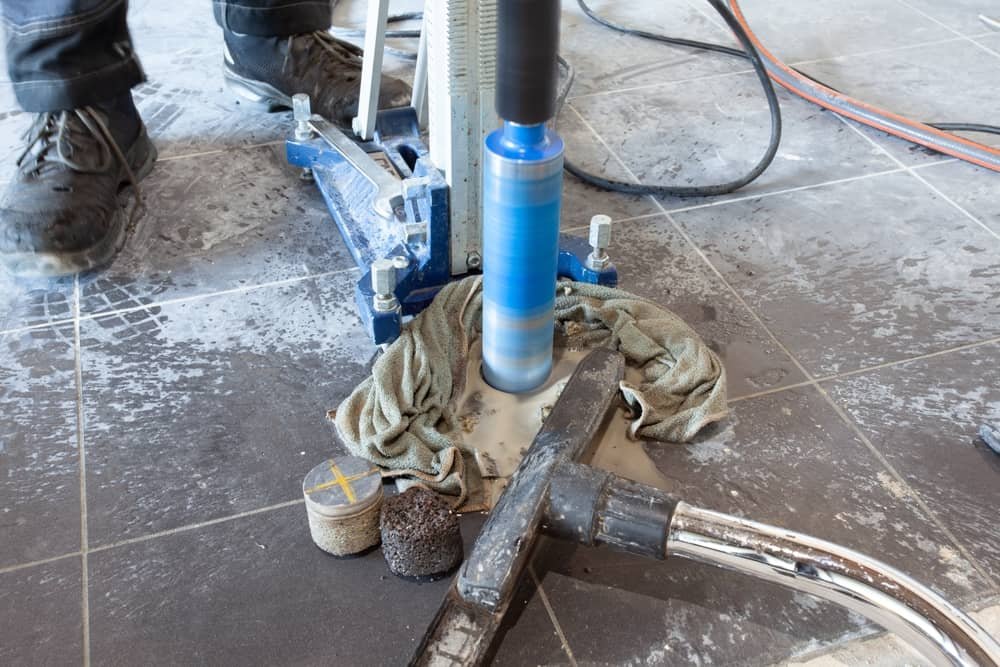
Interior basement waterproofing is performed from inside the basement.
Rather than excavating the entire outside of the home, an interior system typically collects groundwater or seepage near the perimeter of the basement and directs it toward a safe discharge point.
A complete interior drainage system may involve:
- Perimeter drainage channels
- Sub-slab drainage
- Wall drainage or moisture-control components
- A sump basin
- A sump pump
- Proper discharge routing
- Foundation crack treatment where appropriate
Interior systems are particularly useful when groundwater is entering near the joint between the foundation wall and basement floor or rising beneath the slab.
Advantages of Interior Waterproofing
One of the biggest advantages is accessibility.
Installation is performed inside the basement, so contractors usually do not need to excavate gardens, sidewalks, decks, patios, driveways, or other areas surrounding the house.
Interior systems are also easier to inspect and service later because important components such as the sump pump remain accessible.
For homeowners dealing with recurring groundwater seepage, a professionally designed interior drainage system can collect that water and move it away before it spreads across the basement.
Limitations of Interior Waterproofing
Interior waterproofing does not automatically correct every problem outside the foundation.
If roof runoff is dumping beside the house, the yard slopes toward the foundation, or surface water is collecting against a wall, installing an interior drain without addressing those conditions may leave part of the problem unresolved.
That is why an inspection should look beyond the visible puddle.
Sometimes the correct solution starts with gutters, grading, drainage or discharge routing rather than a larger basement project.
EPA guidance similarly recommends fixing the source of seepage and notes that water flowing toward a house, missing gutters, and poor grading can contribute to basement moisture problems.
What Is Exterior Basement Waterproofing?
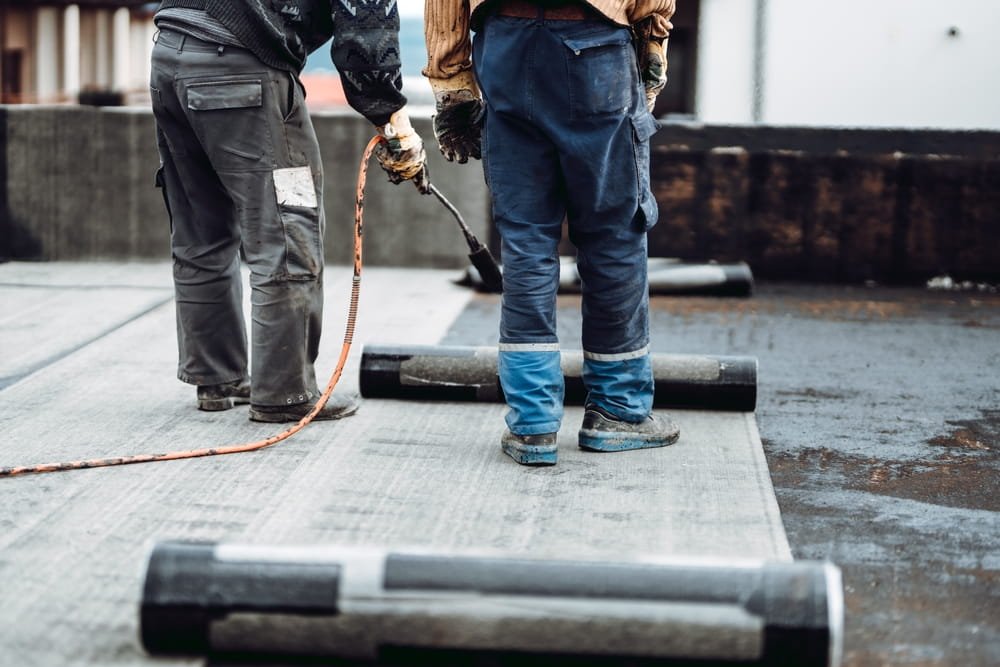
Exterior basement waterproofing works from outside the foundation.
Depending on the problem, the work may involve exposing foundation walls, applying a waterproofing membrane, installing or replacing foundation drainage, correcting grading, or creating a drainage route that carries water away from the house.
The goal is to reduce the amount of water reaching the foundation in the first place.
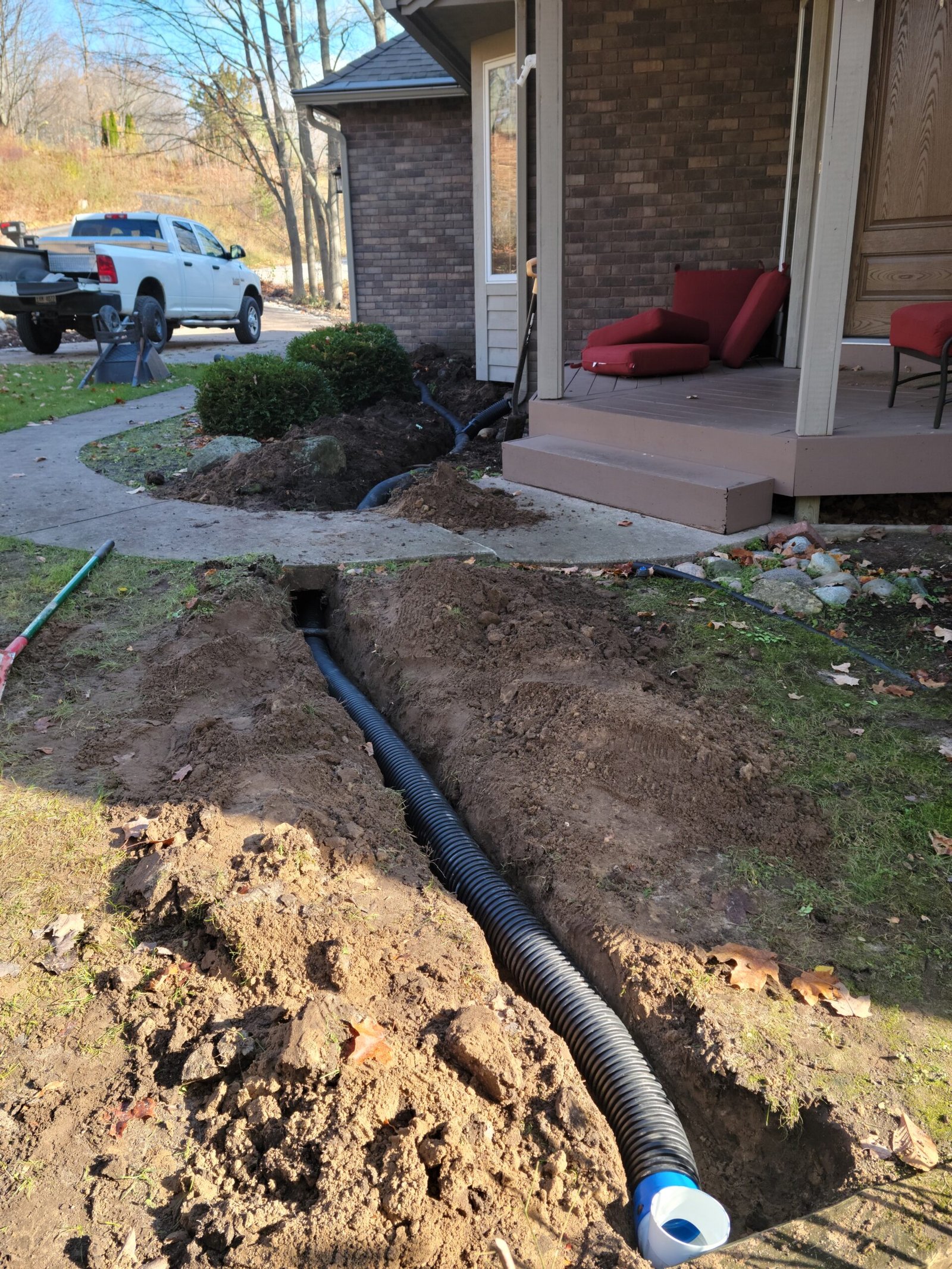
H2O Drainage Systems provides exterior drainage systems for properties where outside water movement is contributing to foundation and basement problems.
Advantages of Exterior Waterproofing
Exterior work allows the water problem to be addressed from the side where surface water and soil moisture first reach the foundation.
It can be particularly valuable when:
- Water repeatedly collects beside the house
- A foundation wall has exterior water exposure
- Existing exterior drainage has failed
- Major foundation work already requires excavation
- Yard drainage is directing water toward the structure
- Exterior access is practical
When correctly designed, exterior drainage can reduce the volume of water reaching foundation walls and lower the burden placed on other waterproofing components.
Limitations of Exterior Waterproofing
Exterior work can be more disruptive.
Access may require excavation around landscaping, patios, porches, driveways or utilities. The project is also more affected by site access and weather than an interior installation.
And exterior waterproofing does not mean every basement suddenly becomes immune to groundwater beneath the slab.
That is an important distinction.
If water pressure develops underneath the basement floor, an interior drainage and sump system may still be necessary.
Is Interior or Exterior Basement Waterproofing Better?
The better system is the one that addresses the actual path water is taking into or around your home.
That means the answer changes from property to property.
Interior waterproofing may make more sense when:
- Water appears at the wall-floor joint
- Groundwater rises beneath the basement slab
- The basement develops seepage after snowmelt or prolonged rain
- Exterior excavation would be difficult
- An existing interior system needs upgrading
- Water can be reliably collected and discharged through a sump system
Exterior waterproofing or drainage may make more sense when:
- Surface water collects beside the foundation
- Soil or landscaping slopes toward the house
- Exterior foundation walls are receiving significant water exposure
- Existing exterior drainage is damaged or inadequate
- The foundation is already being excavated for other work
- Water can be redirected before it reaches the structure
You may need both when:
A property has more than one water source.
For example, exterior drainage may reduce rainwater reaching the house while an interior drainage system manages groundwater that still reaches the footing or underside of the slab.
A basement waterproofing plan should therefore be based on water movement—not simply on a preference for working inside or outside.
Why Basement Waterproofing Is Different in Northern Michigan
Waterproofing recommendations should account for local conditions.
Homes around Traverse City and Northern Michigan regularly experience seasonal rainfall, snow accumulation, spring thaw, freeze-thaw cycles, and changing groundwater conditions.
The region also contains many sandy and highly permeable soils. USDA soil data identifies multiple sandy soil series associated with the Grand Traverse area, including soils with rapid or moderately rapid permeability.
That matters because water can move through permeable soil quickly.
During rain or snowmelt, a large amount of water may reach the area around a foundation in a relatively short period. The waterproofing system then has to do more than cover a visible crack—it needs to control where that water travels.
That is one reason our Traverse City basement waterproofing services focus on identifying groundwater, surface drainage, and foundation entry points before recommending a solution.
What Does It Cost?
Based on current industry data and typical installs in our service area:
- Interior waterproofing: roughly $3,000–$8,000 for most residential basements, depending on linear footage and whether a new sump pump or battery backup is included.
- Exterior waterproofing: roughly $7,000–$15,000+, driven mainly by excavation depth, perimeter length, and site access.
- Hybrid approach: many homes end up combining a targeted exterior fix (say, regrading and gutter extensions to cut down the water reaching the foundation) with an interior system as a backup, often the most cost-effective way to get both prevention and a safety net.
Exact pricing depends on your foundation type, basement size, and how the site is accessed, which is why we always start with a free estimate rather than a ballpark number pulled from a national average.
Don’t Ignore Gutters, Grading and Drainage
Not every wet basement requires excavation or a complete interior drainage system.
Start by looking outside.
Ask:
- Are gutters overflowing?
- Do downspouts discharge beside the foundation?
- Does the ground slope toward the house?
- Does rainwater collect in low areas?
- Is sump water being discharged too close to the building?
- Does the problem happen only during heavy rainfall?
- Does water remain around the house after a storm?
Correcting surface drainage may significantly reduce the volume of water reaching the foundation.
For some homes, professionally installed gutter extensions can be part of the solution by carrying roof runoff farther from the house.
This diagnostic approach also matches EPA moisture-control guidance, which specifically identifies gutters, landscaping, and water flowing toward a house as possible contributors to basement water problems.
Where Does a Sump Pump Fit Into Basement Waterproofing?
A sump pump is commonly paired with an interior drainage system.
The drainage system collects groundwater and directs it into the sump basin. The pump then moves that water through a discharge line and safely away from the foundation.
FEMA describes sump pumps as systems that direct groundwater away from a home through drainage piping.
But the pump is only one part of the system.
A powerful sump pump cannot compensate for poor drainage design, a badly routed discharge line or water continually being discharged beside the foundation.
For homes experiencing seasonal groundwater movement, professional sump pump installation in Traverse City can provide an important layer of basement protection.
What About Waterproof Paint and Crack Sealers?
Waterproof coatings and crack repairs have useful applications, but they should not be confused with a complete drainage strategy.
If a specific crack is the only entry point, properly repairing that crack may solve the immediate leak.
But if groundwater pressure is forcing water toward the wall-floor joint or beneath the slab, simply painting the wall does not provide that water with another place to go.
The same applies outside.
Adding a membrane without providing adequate drainage can leave the property with unresolved water-management problems.
The best solution addresses both the entry point and the water source whenever possible.
How Do You Know Where Basement Water Is Coming From?
Pay attention to when and where the problem appears.
Water at the bottom of a basement wall
This can point toward groundwater or water entering at the wall-floor joint.
Water through a visible wall crack
The crack may need repair, but the exterior water conditions around that section of foundation should also be inspected.
Water appearing after heavy rain
Check gutters, downspouts, grading and exterior drainage in addition to the basement itself.
Water during spring thaw
Seasonal groundwater movement and large amounts of melting snow may be contributing to the problem.
Water rising through floor cracks
Sub-slab groundwater pressure should be investigated.
Damp walls without standing water
Humidity, condensation, minor seepage or exterior moisture can all contribute, so diagnosis matters before waterproofing begins.
Persistent moisture should not simply be covered up. EPA guidance notes that controlling moisture is fundamental to controlling indoor mold growth.
Can Interior and Exterior Waterproofing Be Used Together?
Yes.
In some homes, combining interior and exterior water management creates the most complete solution.
For example, an exterior drainage system can reduce surface water reaching the foundation while an interior perimeter drain captures groundwater that still reaches the footing.
Add properly routed gutters and a reliable sump pump, and each part of the system performs a specific job.
The important point is that more waterproofing is not automatically better.
Every component should solve an identified problem.
Get the Right Waterproofing Solution for Your Basement
Choosing between interior vs. exterior basement waterproofing should not come down to whichever system someone happens to sell.
It should come down to the source of the water.
If your basement leaks after heavy rain, develops damp walls, collects water during snowmelt or has recurring moisture around the floor and foundation, H2O Drainage Systems can inspect the problem and recommend a solution designed for your property.
We’re a locally owned waterproofing and drainage company based in Interlochen, serving Traverse City and Northern Michigan homeowners since 2024. We don’t push one method because it’s what we sell. We survey the actual foundation and basement conditions on your property and recommend the approach that solves your specific problem, whether that’s interior waterproofing, exterior drainage, or a combination of both.
Every estimate is free, on-site, and specific to your home, not a phone quote based on square footage alone. If you’re not sure which direction to go, that’s exactly what the inspection is for.
Request your free estimate or call us at 231-392-6350 to get a straight answer on what your basement actually needs.
Frequently Asked Questions
Is exterior waterproofing always better than interior?
No. Exterior waterproofing is more thorough because it stops water before it reaches the wall, but interior systems are highly effective for the seasonal seepage most homes actually deal with, at a fraction of the cost and disruption.
Do I need a sump pump if I get exterior waterproofing?
Not always. It depends on your site’s drainage conditions; some exterior systems can drain by gravity to daylight or a storm sewer, while others still benefit from a sump pump as backup, especially on flatter lots.
Can you waterproof a basement only from the inside?
Yes, many basement water problems can be effectively managed with an interior drainage and sump pump system. However, exterior problems such as poor grading, overflowing gutters or water pooling beside the foundation should still be corrected.
Is exterior basement waterproofing worth it?
It can be when water is repeatedly reaching foundation walls from outside, existing exterior drainage has failed, or excavation is already required. It may be unnecessary if the actual problem is groundwater beneath the basement floor.
Do I need a sump pump with interior waterproofing?
Many interior drainage systems use a sump pump to remove collected groundwater. Whether your home needs one depends on drainage design, elevation and where the collected water can safely discharge.
Can exterior drainage fix a wet basement?
Yes, when surface runoff or water accumulating around the foundation is the main cause. Correcting grading, downspout discharge, or exterior drainage can sometimes reduce or eliminate basement seepage.
Can a house need both interior and exterior waterproofing?
Yes. Homes can experience both surface-water and groundwater problems. Exterior drainage can reduce water reaching the foundation while an interior system handles groundwater that still reaches the footing or slab.