If you’re standing in a damp basement reading this, we get it. Below are the questions homeowners ask us most, answered the way we’d answer them at your kitchen table. Nothing here is a sales pitch. If something doesn’t fit your situation, we’ll tell you.
Water gets into a basement in two main ways: groundwater pushing up from below, or surface water (rain, snowmelt, runoff) soaking in from the sides. In Northern Michigan we see both. Spring thaw and heavy rain raise the water table, and that pressure looks for the easiest way in: the joint where the floor meets the wall, cracks, or porous block.
Before you spend money, figure out which one you have. Water at the floor edges usually points to groundwater. Wet spots near a window well or one corner after rain usually point to surface water. The fix is different for each, which is why we inspect before we recommend anything.
Musty smells, white chalky residue on walls (efflorescence), peeling paint, damp or discolored block, water at the floor edge after rain, rust on the furnace base, and mold spots are the classic ones. Even one of these means water is getting in somewhere. A basement doesn’t have to flood to have a moisture problem.
Concrete block is strong but porous, and it works like a sponge. When water sits against the outside of the foundation, it soaks into the block and can fill the hollow cells inside the wall. Over time that breaks down the mortar that holds the blocks together. That’s why block foundations, common in older homes, need drainage that reaches inside the wall, not just a coating on the surface.
Usually, yes. Even without visible water, damp air and hidden moisture feed mold and mildew. A lot of the air in your home moves up from the basement or crawl space, so this affects more than the basement.
For most existing homes, an interior drainage system is the most practical fix. It catches water at the footing, channels it to a sump basin, and pumps it away from the house. Exterior work has its place, but it means digging up your yard and is rarely the first choice for a home with manageable seepage and no structural damage.
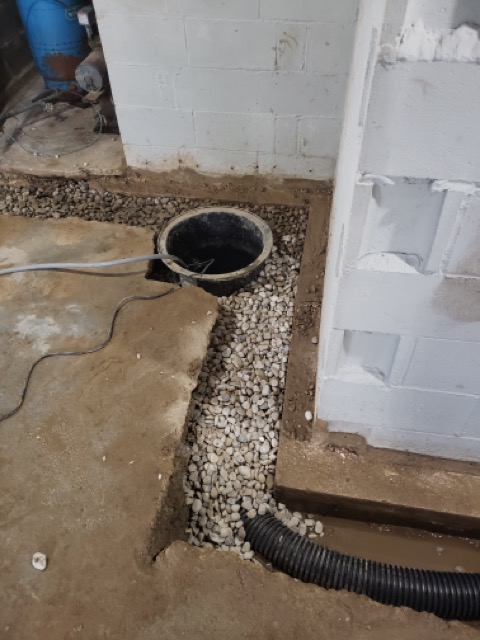
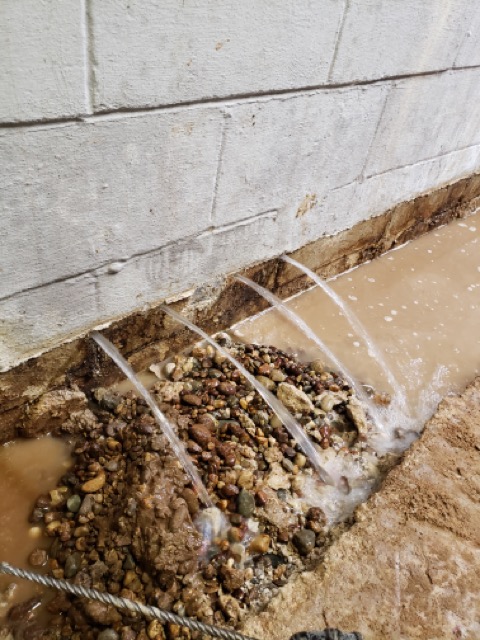
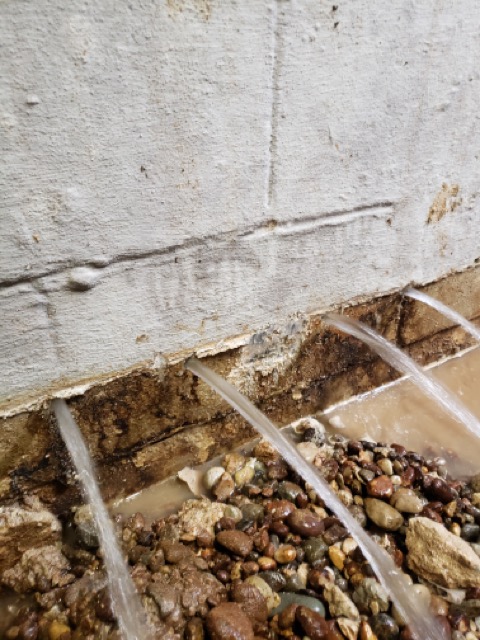
Instead of trying to hold water back, the system controls it. We open a channel along the inside perimeter, lay drain tile in a bed of round rock, and pitch it toward a sump basin. The rock leaves gaps so water flows freely into the pipe, and the pump sends it out and away from your foundation. In block foundations we also drill weep holes so water trapped inside the wall can drain out.
Interior systems manage water that reaches the foundation. Exterior systems stop it before it reaches the wall. Exterior work usually costs more and involves excavation. One guide from The Basement Guide notes that interior systems give enough protection for most existing homes with manageable seepage and no structural damage, at a fraction of the cost. Exterior is worth considering when interior methods have failed or when structural repair needs outside access. We’ll tell you which one fits after we see your foundation.
Paint and sealants can help with light dampness, but they don’t stop groundwater pressure. Water will find a way behind the coating and push it off the wall. If you have recurring water, a coating covers up the symptom and leaves the cause in place.
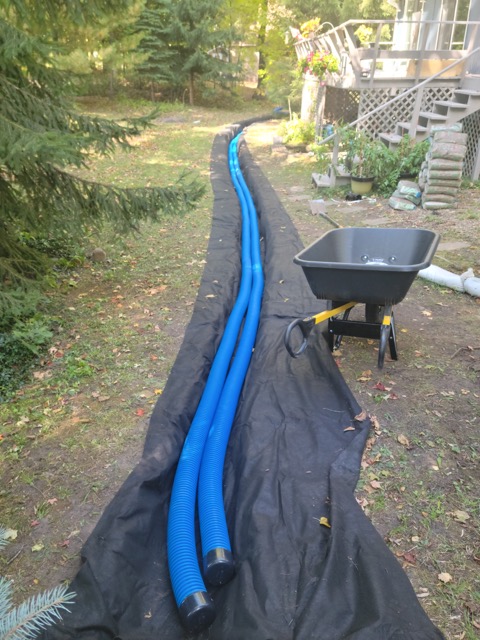
They’re close relatives. Both are perforated pipe in gravel that collects water. “French drain” usually refers to a system outside the home. “Drain tile” or “interior drain” refers to the pipe at the footing. What matters more than the name is the slope and the stone around it. The pipe has to be pitched to the sump so water actually moves.
If you’re collecting water with a drainage system, yes. The pump is what gets the water out. We install Zoeller M98 pumps, a proven, dependable model, and pair them with 8-slot drain tile so water enters the system quickly. A battery backup is worth adding, since storms that flood basements often knock out power.
A pump typically needs replacing every 7 to 10 years, so test it once a year by pouring water into the basin and watching it kick on.
Yes. The approach depends on the layout and the water source. Sometimes we can work along an exposed wall or a section of floor, and sometimes we open a narrow strip and finish it back. We’ll go over the options before any work starts.
It depends on basement size, foundation type, and the method. National figures vary widely. One guide puts interior methods at about $3,000 on average and exterior at about $7,000, and another lists interior French drains at $4,000 to $17,000, so treat these as ballparks only. We give a free on-site estimate with a written scope so you can see exactly what you’re paying for.
Basement size and depth, block vs. poured concrete, how much of the perimeter needs drainage, how many sump pumps are needed, access, and whether the floor is finished. Block foundations generally cost more than poured concrete.
Most jobs take 1 to 3 days, depending on the method. Interior work is usually at the shorter end. Exterior digging adds days.
Interior systems, yes. The work is inside, so frozen ground doesn’t matter. Exterior excavation isn’t practical in frozen or saturated soil. If your basement floods every spring, fall or winter is a good time to get on the schedule.
A dry, documented basement removes a major objection for buyers and inspectors. It also protects the structure, which matters more than resale price. Keep your warranty and receipts for the sale.
Usually not for seepage or groundwater, though sudden events like a burst pipe may be covered. Policies vary a lot, so check yours or ask your agent, and ask about sump pump backup coverage.
Extend downspouts at least several feet from the house, keep gutters clean, and slope the soil away from the foundation. Keep window wells clear. These simple steps cut down surface water. They won’t stop groundwater rising, but they take pressure off any system you have.
Quality systems last decades. One source estimates interior French drains and sump pumps can work 20 to 30 years with regular upkeep. Pumps are the wear item, so plan on replacing them over time.
Once a year, and before spring thaw, pour a bucket of water into the basin. The pump should turn on, empty the water, and shut off. If it’s noisy, slow, or doesn’t start, call us before the next storm.
Yes. We survey your foundation and basement, find the water source, and give you a clear recommendation. If a simpler fix will do, we’ll say so.
Traverse City, Ellsworth, Empire and surrounding Northern Michigan communities.
We follow set standards: proper pitch to the sump, round rock for flow, weep holes in block, and no shortcuts or temporary fixes. Homeowners like the customer who called us out on a 1950s basement puzzle tell us the difference is in the diagnosis.
The trench needs to be at least 12-18 inches wide. This lets the system hold more water, so the pump runs less. A wider trench takes much more work but makes your system exponentially more effective. If the trench is too small, a severe storm can overwhelm your system.
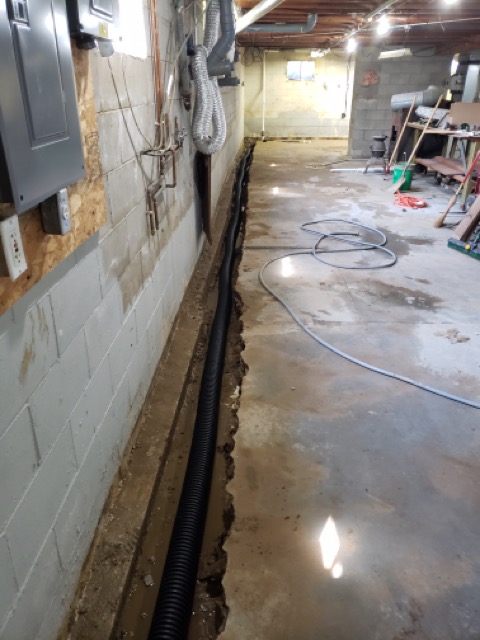
Corrugated pipe has stood the test of time and remains the most popular and effective way to move water. Coincidentally, it is also the cheapest option for homeowners and businesses. I have no idea why other companies use other less effective products just to market themselves differently. To me, this does not favor any homeowner using a less effective product. Corrugated pipe is harder to install than other products because it is bigger. In turn, it being harder to install also makes it a more effective system. To install it correctly, the pipe needs to be pitched to a sump basin so water can move efficiently from one side of your basement to the other. Our corrugated pipe is perforated 360 degrees, so water can enter the pipe from any angle.
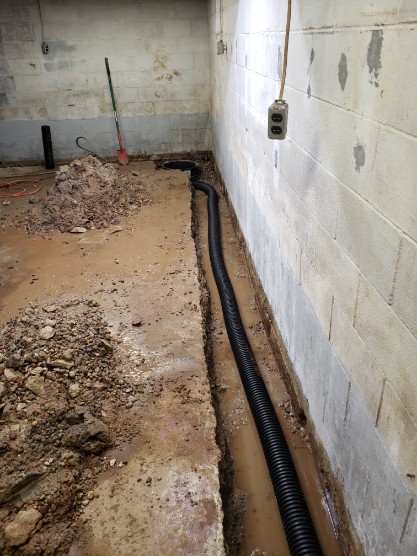
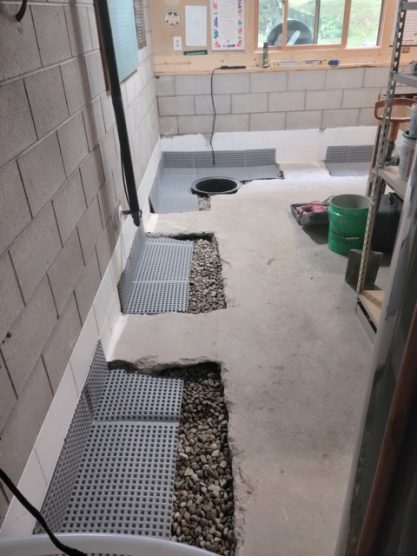
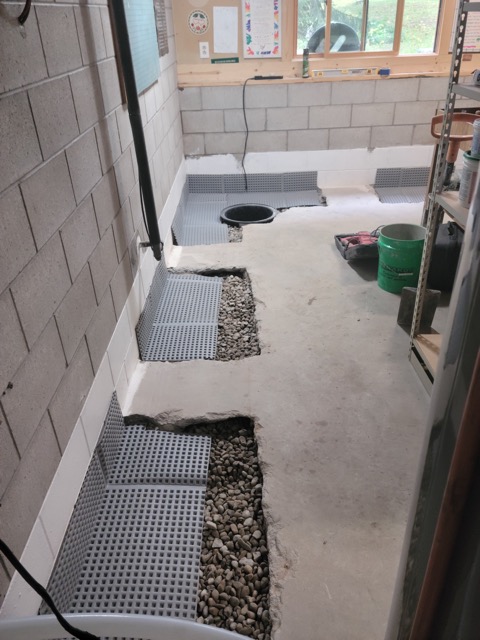
Engineering tabs are pieces of the floor left in place to maintain the foundation’s integrity while work is being done. They are vital to maintaining the foundation’s health. The last thing you want is to remove the entire perimeter of the floor. The floor’s job is to hold your walls in place so they do not cave inward. I don’t see other companies doing this, and it worries me. Your foundation was built the way it was for a reason, and you do not want to disturb that.
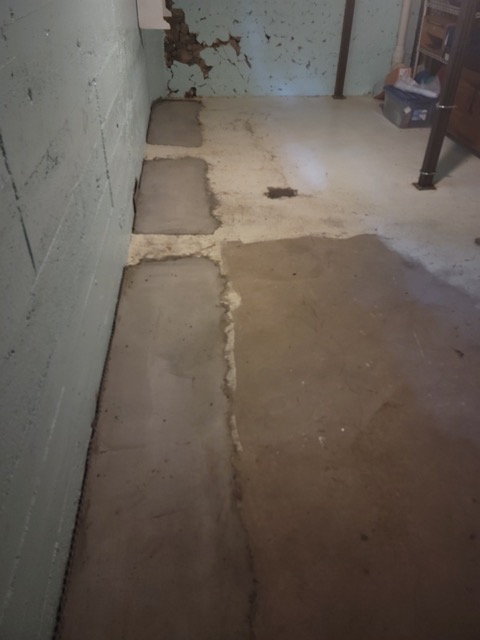
If you have a multiple-pump system, you’re going to need two separate discharges. This lets both pumps work independently without getting in each other’s way during a storm.
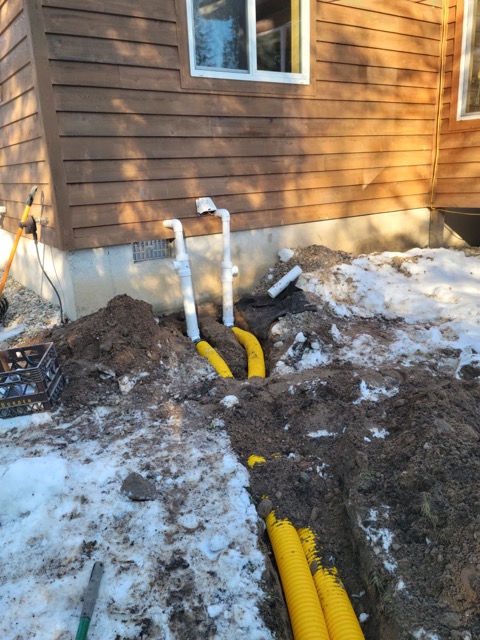
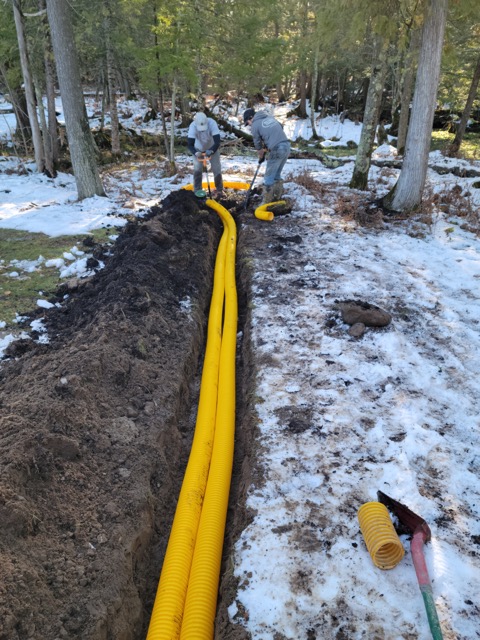
Once you install your discharge, you won’t want grass to grow over it and stop the water from draining. The turf restrictor plate allows for a maintenance-free way to solve this issue. It comes with every discharge.
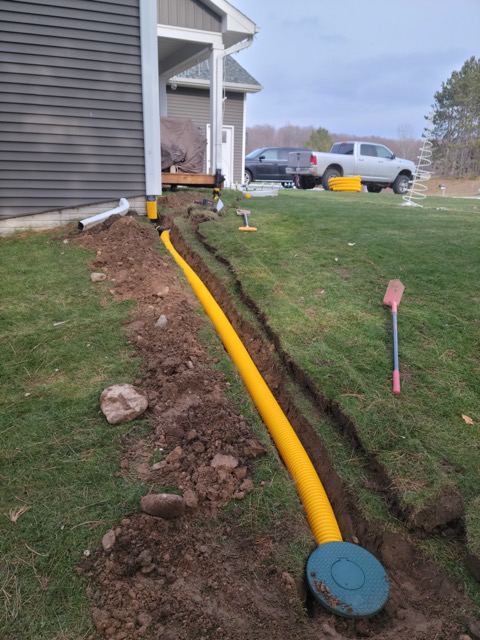
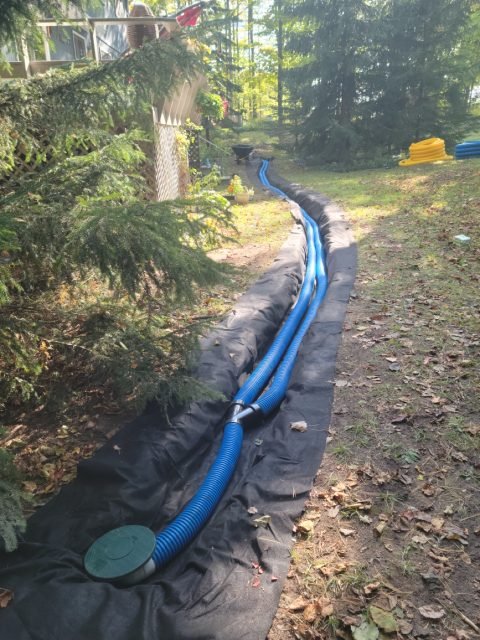
If you don’t dig the trench to the bottom of the footer, your system will hold significantly less water. You want to control the water level below your floor. That is what causes your floor to be wet – it means the water level is in line with your floor. If you don’t dig the trench deep enough, you can still get water on your floor even if you have a system in place.
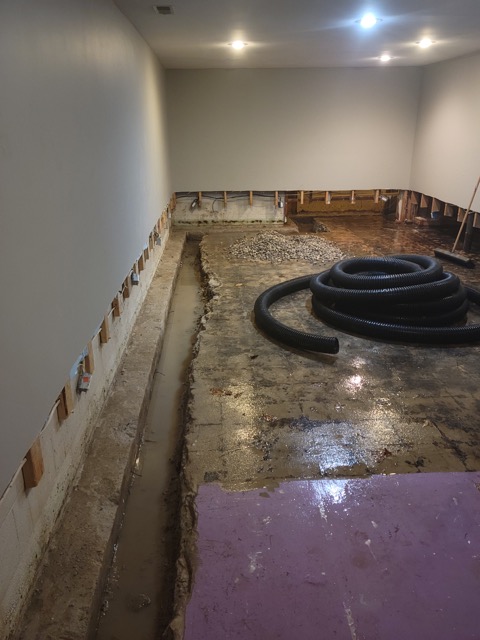
Poly drain is a waffle board that lets water build up in your walls drain into the trench efficiently. This board also lets you replace the removed concrete to its original thickness. The “waffle” part of the board allows the replaced concrete to keep pressure on the wall once it’s cured.
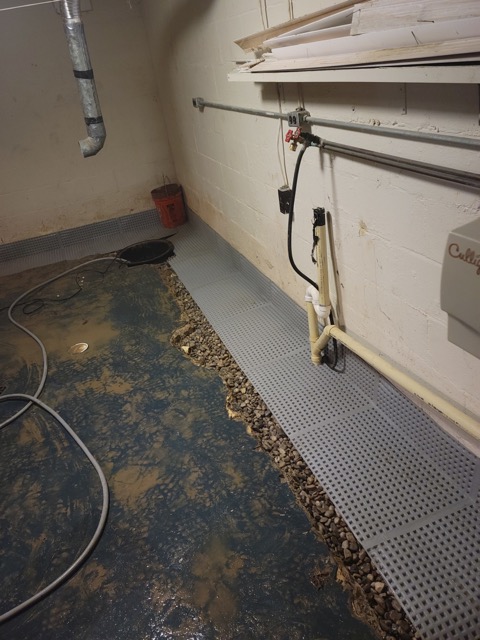
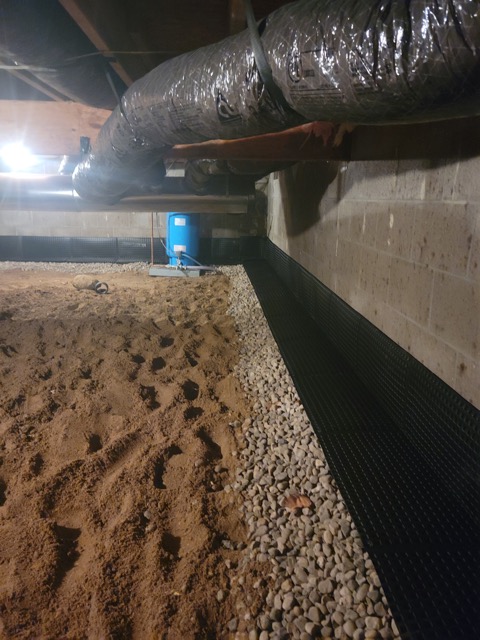
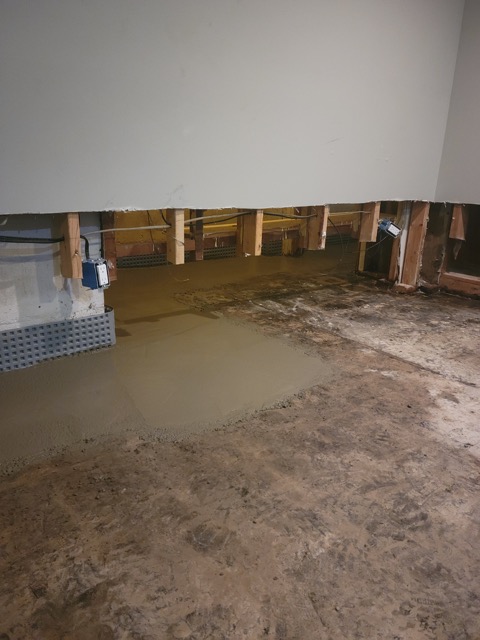
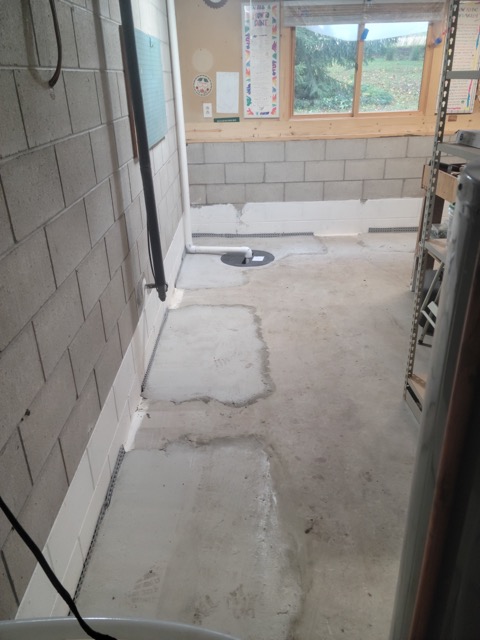
A clean finish matters if the homeowner wants to put flooring back on the concrete. Also important for aesthetics.
Round rock fills the trench after you remove all the soil. Round rock creates a “void,” or air space, so water that enters the basement can easily reach the pipe. You also use round rock surrounding the basin and pump. This lets groundwater from under your foundation enter the basin.
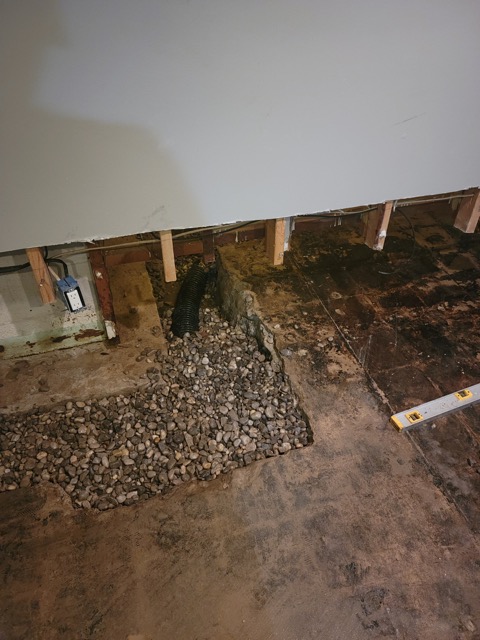
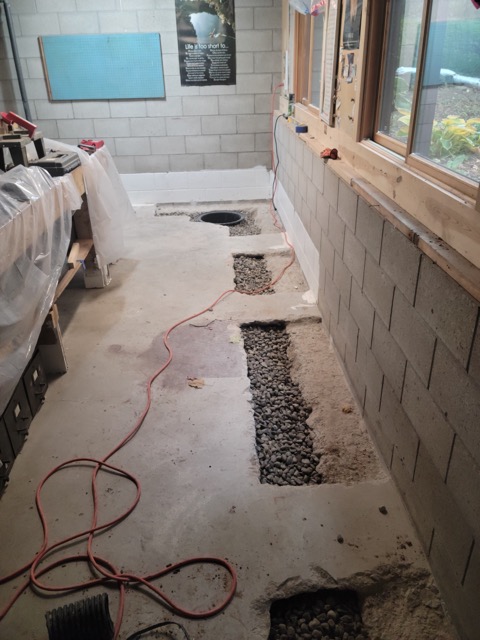
Weep holes are holes that are drilled in masonry blocks. If you have this type of foundation, you will need a hole drilled in every cell and mortar joint along your system. Masonry blocks are strong, but they are porous and act like water sponges. If water sits outside your foundation, it will eventually soak into your blocks and fill your wall. This is what makes your walls damp and discolored. Water inside those blocks causes major issues with your foundation over time, breaking the “glue” that holds the blocks together. Eventually, you will see a white film on the surface of the affected blocks, which is not a good sign. However, you can stop this process by drilling holes in these blocks and letting water pass through unrestricted. Damage occurs only when water sits for a long time.
Water issues are very complex. There isn’t a “one size fits all” system that solves all water problems. Water can come from below or above your house. Sometimes only a corner of your house gets wet because the foundation sealant in that area didn’t last as long. Some issues can be solved from the outside and can save you a ton of money. Flexibility is a staple in how we approach every home. To offer flexibility, we must be honest about the severity, cause, and future ramifications. We offer many options for every home and let the homeowner decide what is best.